Installing a water fountain in a public space is no longer optional. During heat waves, urban centers become veritable heat islands, with temperatures that can exceed those in rural areas by several degrees. Without direct access to drinking water, people limit their movements, avoid public spaces, or expose themselves to health risks. In this context, ensuring an accessible water source is no longer a secondary service: it is a direct response to a public health challenge.
Beyond their primary function, fountains have now become an integral part of urban infrastructure, providing a water source designed to meet everyday needs and enhance the appeal of public spaces.
A public health issue and a challenge regarding access to safe drinking water in urban areas
In the city, we’ve noticed that water features (fountains, misters) can lower the perceived temperature by 2 to 5°C.
Access to drinking water is a basic need, but it remains unevenly distributed in public spaces. It is clear that the effectiveness of a water fountain depends not only on its presence, but also on its location and visibility.
During heat waves, this type of equipment plays a key role. A water fountain installed in a busy public square or near a park becomes an essential hub for easy access to water. It helps prevent the risks associated with dehydration, particularly among the most vulnerable people.
This is the philosophy behind Water Connect’s solutions: to provide street furniture featuring a visible, accessible water fountain suitable for all purposes (drinking, filling a water bottle, or simply cooling off), ensuring that it is actually used on a daily basis.
In several urban projects, the inclusion of strategically placed fountains has helped maintain foot traffic in public spaces even during heat waves. Water thus becomes an urban service in its own right, on par with lighting or transportation, as well as a concrete tool for helping cities adapt to climate change.
Public fountains: facilities designed for everyday use
A public fountain is not merely for occasional use. It is a part of residents’ daily lives and blends seamlessly into the urban landscape.
You’ll find it outside a school, along a promenade, in a square, or in a park. It lets a child have a drink after playing, a runner fill their water bottle, or a passerby take a refreshing break.
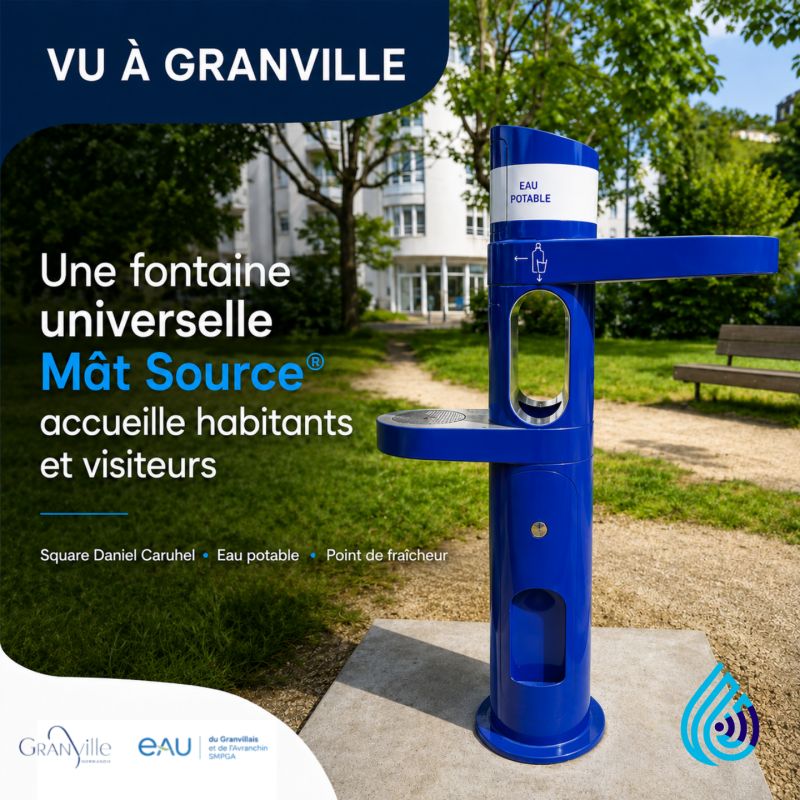
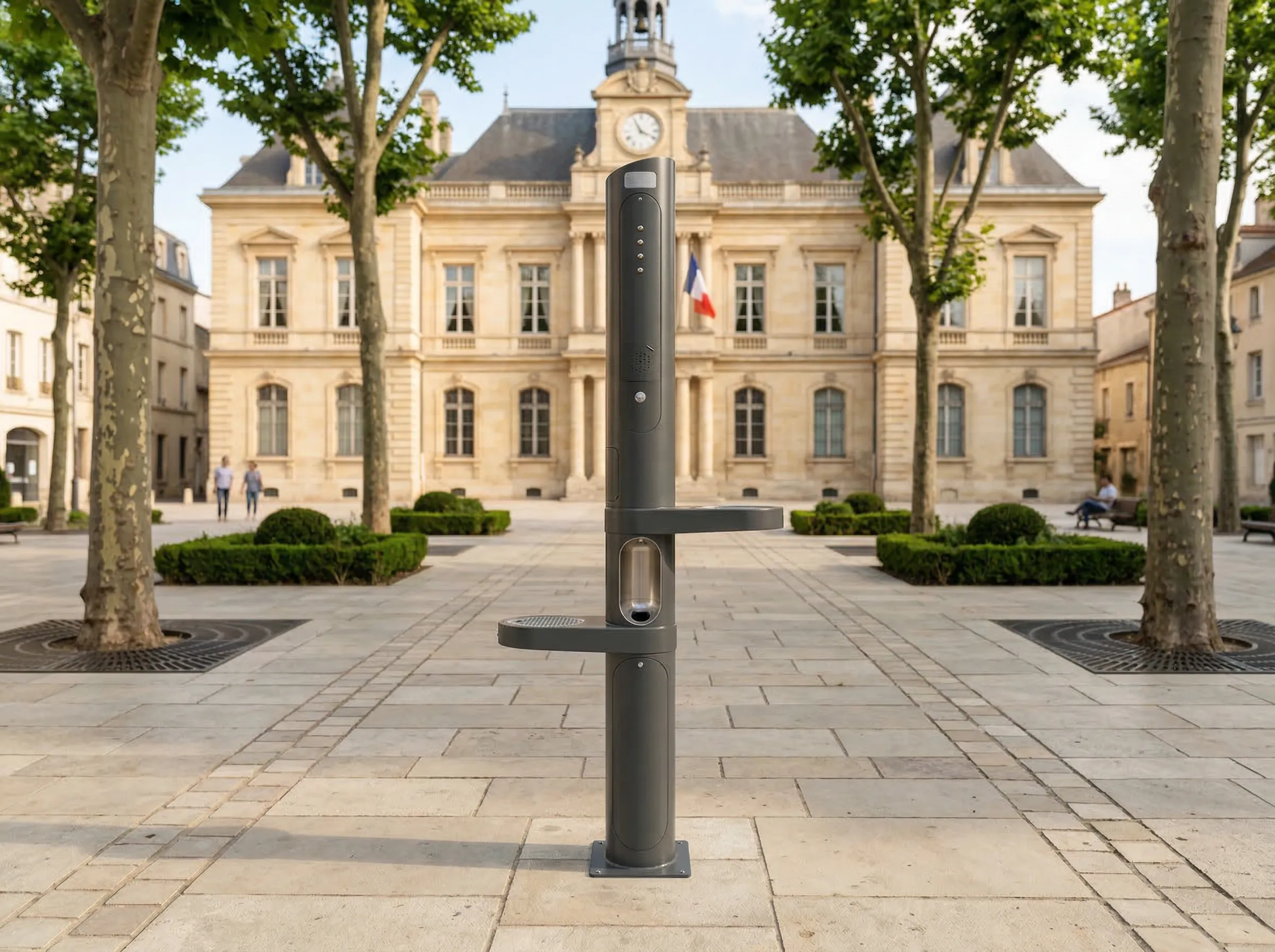
At Waterconnect, the new generation of water fountains is designed as street furniture with a built-in water source, intended to accommodate a variety of uses. Some models offer multiple heights, making them accessible to children, adults, people with disabilities, and even animals.
The Mât Source fountain is a perfect example of this evolution. It is no longer just a water source, but a versatile, sturdy, and stylish fixture capable of blending into a variety of settings while meeting the practical needs of users.
The Mât Source thus establishes itself as a fountain suited to public spaces and new urban uses.
A key factor in enhancing the appeal of public spaces
Installing a fountain also transforms the way a space is experienced.
As experts in urban cooling solutions, we have observed that their impact goes far beyond simply providing hydration. A well-integrated fountain helps organize pedestrian flow, creates a visible focal point, and contributes to the clarity of the space.
People stop there, linger longer, and feel more at home in the space. This fosters a positive social dynamic and enhances the sense of community. In several cities where our installations have been deployed—in Paris, the Île-de-France region, and elsewhere—they have become places where people gather, take a break, and interact, especially during heat waves.
In pedestrian zones or eco-neighborhoods, their presence plays an even more significant role. Public spaces equipped with them remain active for longer during the day, especially during hot weather, as they provide both a useful service and immediate comfort.
Finally, a well-integrated fountain contributes to the identity of the site. It serves as a visual landmark and a gathering place, and enhances the perception of a high-quality public space. It is this combination of practical use, comfort, and appeal that makes it a key element in urban development projects today.
A sustainable solution to environmental challenges
Installing a water fountain in a public space encourages more responsible behavior.
By making it easier to access drinking water, communities are encouraging people to use reusable water bottles instead of plastic bottles. This helps reduce litter in public spaces and also brings about lasting changes in behavior.
This type of street furniture is fully aligned with ecological transition policies. It offers a simple, visible, and effective alternative to more polluting practices.
Some cities go even further by incorporating water fountains into a comprehensive waste reduction strategy, linking them to awareness campaigns or recycling programs.
Fountain or misting system: a matter of complementarity
When developing a landscaping strategy, local governments often weigh the pros and cons of choosing between fountains and misting systems.
A public drinking fountain provides a long-term solution: it allows people to drink, fill a water bottle, and meet a basic need. A misting system, on the other hand, provides immediate refreshment but does not address the issue of access to drinking water.
The two approaches are not necessarily mutually exclusive. They can complement each other depending on the specific uses and spaces involved.
To better understand the differences and make the right choice, check out our article “Fountain or Mist System: Which Solution Is Right for Your City?”
Toward Smart Equipment Management
Fountains are evolving alongside urban technologies. Today, certain systems make it possible to take management and optimization to the next level.
It is now possible to monitor usage, plan maintenance in advance, and control equipment remotely. This enables local governments to better manage their infrastructure while ensuring uninterrupted service.
These issues are discussed in detail in our article “How to Control Cooling Equipment Remotely?”
Key takeaways
Installing a fountain in a public space addresses several issues at once:
- Ensuring easy access to drinking water
- Improve user comfort
- Enhancing the appeal of urban areas
- Encourage more sustainable behaviors
- Integrate the city into a strategy for adapting to climate change.
Conclusion
Today, a water fountain in a public space has become an essential amenity for local communities. At the intersection of health, usability, and environmental concerns, it has far surpassed its original purpose.
By incorporating street furniture with water fountains into their urban designs, cities create spaces that are more welcoming, more resilient, and better suited to the needs of their residents.
In a world where expectations are changing rapidly, investing in simple, visible, and useful solutions like water coolers offers a practical and sustainable solution.