Cities are suffocating.
Every summer, heat waves are becoming longer, more intense, and more frequent. Concrete traps heat, making public spaces unbearable during the day, and people are desperately searching for places to breathe, find shelter, and cool off.
In this context, creating an urban oasis of coolness is no longer just a planning option: it is a necessity for local governments.
But not all devices are created equal.
A single tree, a poorly placed fountain, or insufficient shade are no longer enough to address today’s urban planning challenges during heat waves.
So the real question isn’t whether we should cool down the city. It’s how to design an urban cooling island that is truly effective and sustainable.
Balancing urban planning, practical applications, and technical solutions, the answer lies in a comprehensive approach that we will outline below.
Understanding what an urban cooling island is
An urban cooling island is a design feature intended tolower local temperatures in cities through a combination of solutions: shade, water, vegetation, and appropriate materials.
This type of system directly addresses urban planning challenges during heat waves:
- reduction of the urban heat island effect
- improved thermal comfort
- creating spaces for relaxation and socializing
As demonstrated by the Valenton project, where a green island was created in the heart of a new urban neighborhood, these spaces have become true living spaces used by residents on a daily basis.
The 4 pillars of an effective urban cooling island
1. Shade: the first line of defense against the heat
Shading is the most immediate way to reduce the perceived temperature. In dense urban areas, it can be created using lightweight structures (canopies, arbors), integrated street furniture, or vegetation.
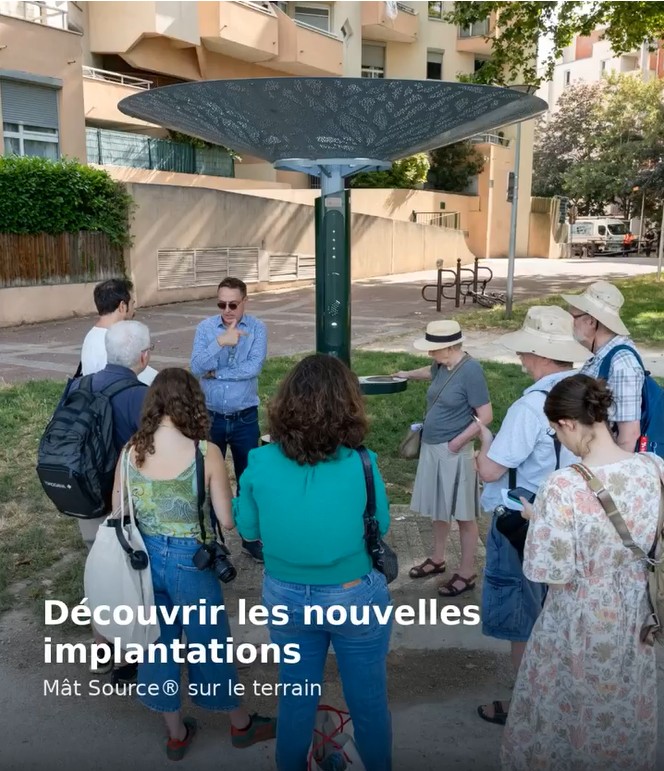
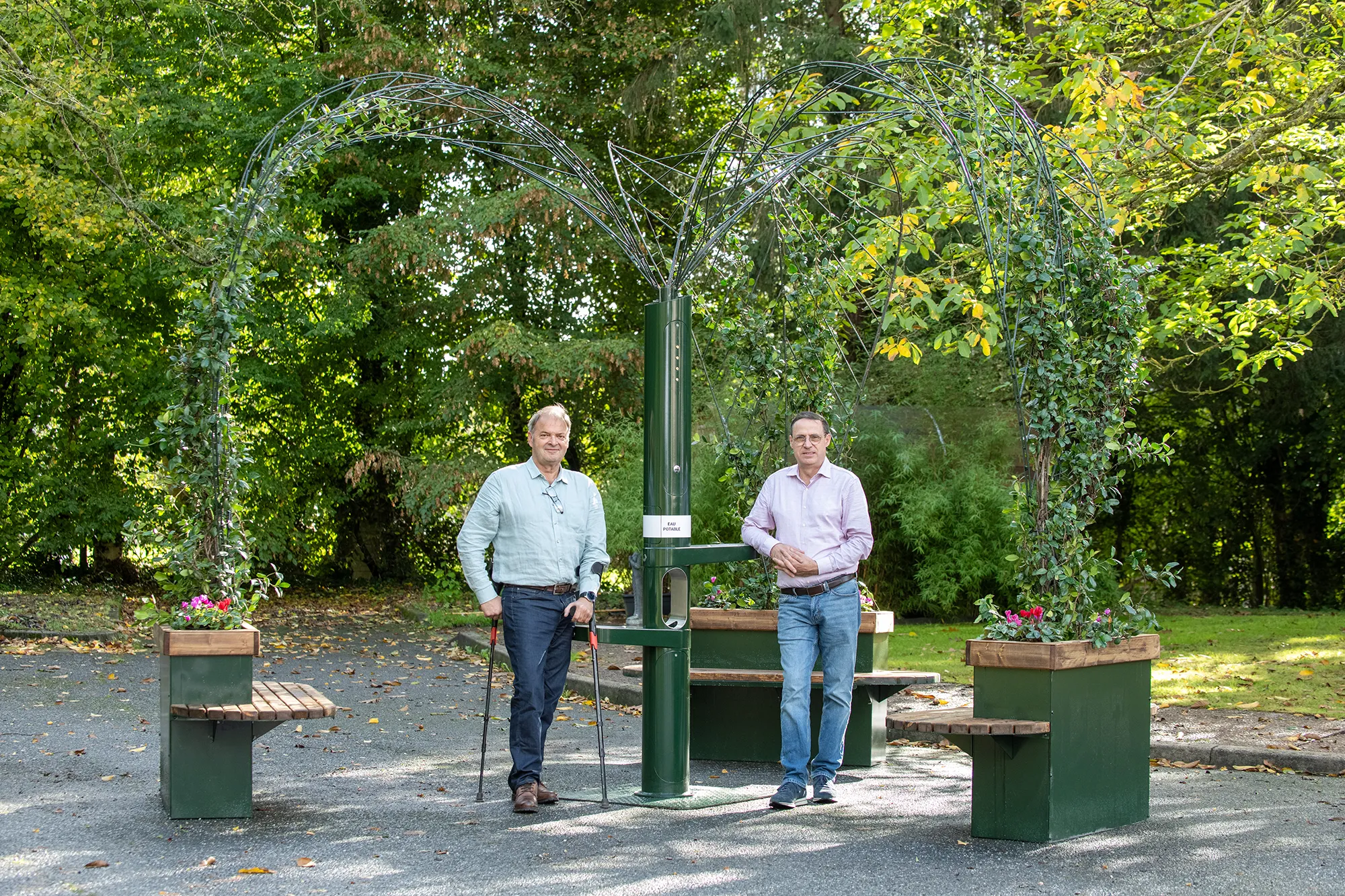
A structure like the Mât Tonnelle, which combines a framework with vegetation, provides effective shade while defining the public space.
This can lower the temperature felt on the ground by several degrees.
2. Water: Actively refreshing the space
Water plays a central role in urban cooling.
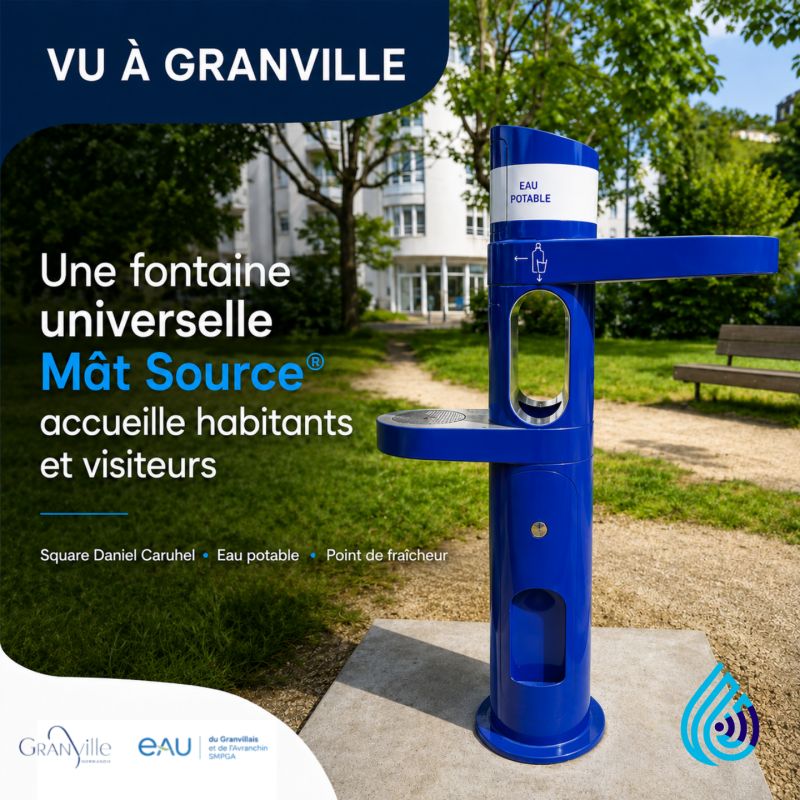
Install a fountain like the Mât Source not only creates a refreshing spot, but also meets an essential need: access to drinking water in the city.
A concrete example: During the 2024 Paris Olympics, several water fountains were installed to meet the needs of visitors in high-traffic areas.
3. Vegetation: Long-term cooling
Vegetation acts as a natural air conditioner through evapotranspiration.
It lowers air temperatures, improves environmental quality, and enhances the appeal of the area.
Incorporating a green dome or plantings around the structures helps create a sustainable and aesthetically pleasing urban oasis of coolness.
4. Use Cases: Designing the User Experience
An effective cooling system isn't just about the technology—it has to be used.
Best practices:
- provide seating
- make the space accessible (especially for people with disabilities)
- create a pleasant place to relax
- incorporate multiple functions (drinking, resting, cooling off)
Waterconnect systems are designed with this in mind, featuring equipment that is accessible, durable, and suited for heavy-duty use in public spaces.
How can an urban oasis be incorporated into an urban design?
Creating an urban cooling island should not be a one-off initiative. It must be part of a comprehensive strategy to cool the city.
Identify priority areas
The strategic locations are:
- highly exposed rocky areas
- near schools
- pedestrian zones
- sports equipment
- tourist areas
The goal is to focus on areas where heating is most critical and where the space is used most frequently.
Increase the number of cooling points
One piece of equipment is not enough. It is recommended that you:
- create a network of islands
- distribute the facilities across the region
- combine different solutions (shade + water + vegetation)
It is this approach that makes it possible to truly revitalize a city at the neighborhood level.
Thinking about modularity and scalability
Solutions must be adaptable:
- site constraints
- to evolving needs
- to local government budgets
Modular equipment allows you to gradually add misting, shading, or smart features.
Take it a step further: combine solutions
To maximize effectiveness, it is essential to combine these measures.
For example: a green island (shade + vegetation), a nearby fountain (drinking water), or a misting system.
This approach addresses several needs at once: hydration, refreshment, and thermal comfort.
To learn more about this topic, check out our article: How to Cool Down a Public Space During a Heat Wave?
📝 Key takeaways
An effective urban cooling island relies on a comprehensive approach:
- Combining shade, water, and vegetation
- Thinking About Usability and Accessibility
- Integrating these measures into an urban strategy
- Increase the number of cooling points
- S’appuyer sur des solutions durables et modulaires </aside>
For more information, here is our article “How to Control Cooling Equipment Remotely?”
Conclusion
Creating an effective urban cooling zone isn’t just about installing equipment; it’s about rethinking urban planning in the face of heat waves.
By cleverly combining solutions such as a Mât Tonnelle green island and water features like the Mât Source, municipalities can sustainably cool the city while improving the quality of life for residents.
In an increasingly challenging climate, these measures are becoming not only useful but also essential.