Cooling public spaces has become a major challenge for local governments. With heat waves becoming increasingly frequent and intense, cities must rethink their urban design to protect residents, reduce heat islands, and improve urban comfort.
But in practical terms, what are the effective solutions? And how can we choose the right measures based on the urban context? This article provides a clear and practical overview to address this challenge.
Why has the renovation of public spaces become essential?
Cities trap heat. Concrete, asphalt, and a lack of greenery: all these factors contribute to the formation of urban heat islands, where temperatures can be up to 5 to 8°C higher than in rural areas.
During heat waves, this leads to several consequences, such as discomfort for residents and users, health risks (dehydration, heatstroke), a decline in the number of people using public spaces, and a deterioration in the quality of life in the city.
In light of this, local governments are now seeking cooling solutions for public spaces that are effective, sustainable, and tailored to their specific needs.
What cooling solutions are available for public spaces in cities?
There is no single solution, but rather a set of complementary measures that can be adapted to the specific context.
1. Water: An Immediate and Effective Solution
Water is one of the quickest ways to cool down a space.
Installing an outdoor drinking fountain allows you to:
- to provide water to users
- to create an accessible refreshment station
- to enhance public spaces
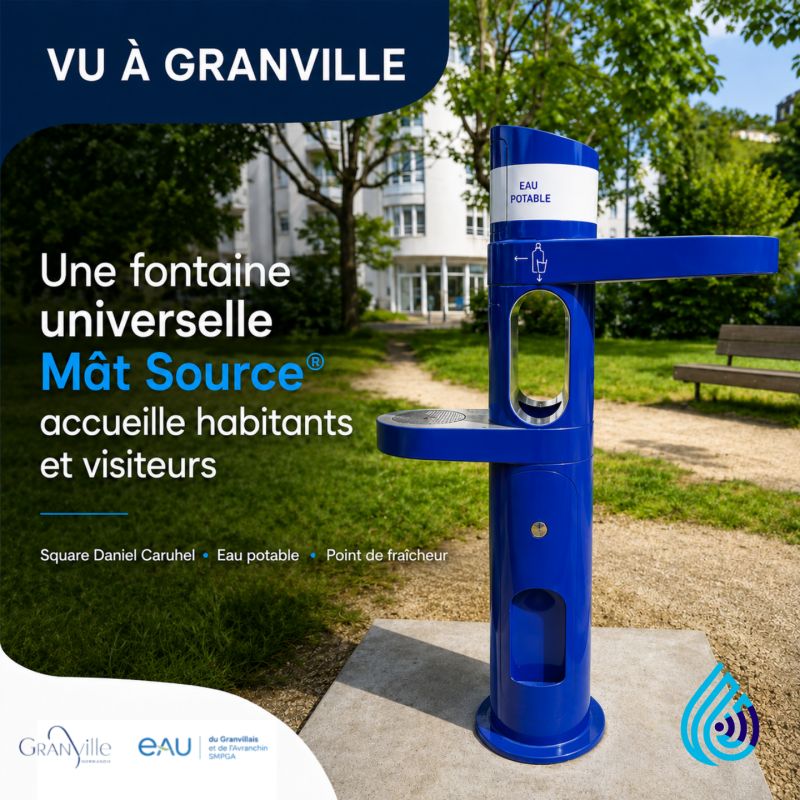
The Mât Source fountain is part of this approach: a modular drinking water station, accessible to all and designed for heavy use.
In Paris, several public spaces have been equipped with Mât Source fountains to enhance comfort during the summer months.
For municipalities that are torn between several options, it is essential to compare their uses, technical constraints, and user experience. This point is discussed in detail in our article “Fountain or Mist System: Which Solution Should Your City Choose?”
2. Vegetation and shade for long-lasting cooling
Vegetation plays a key role in temperature regulation. It provides:
- in the shade
- evapotranspiration (natural cooling)
- visual and environmental comfort
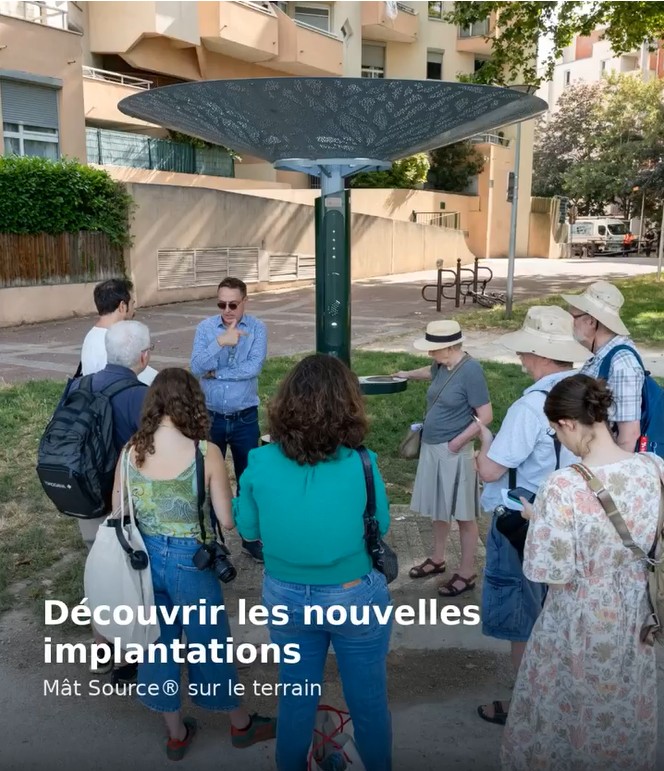
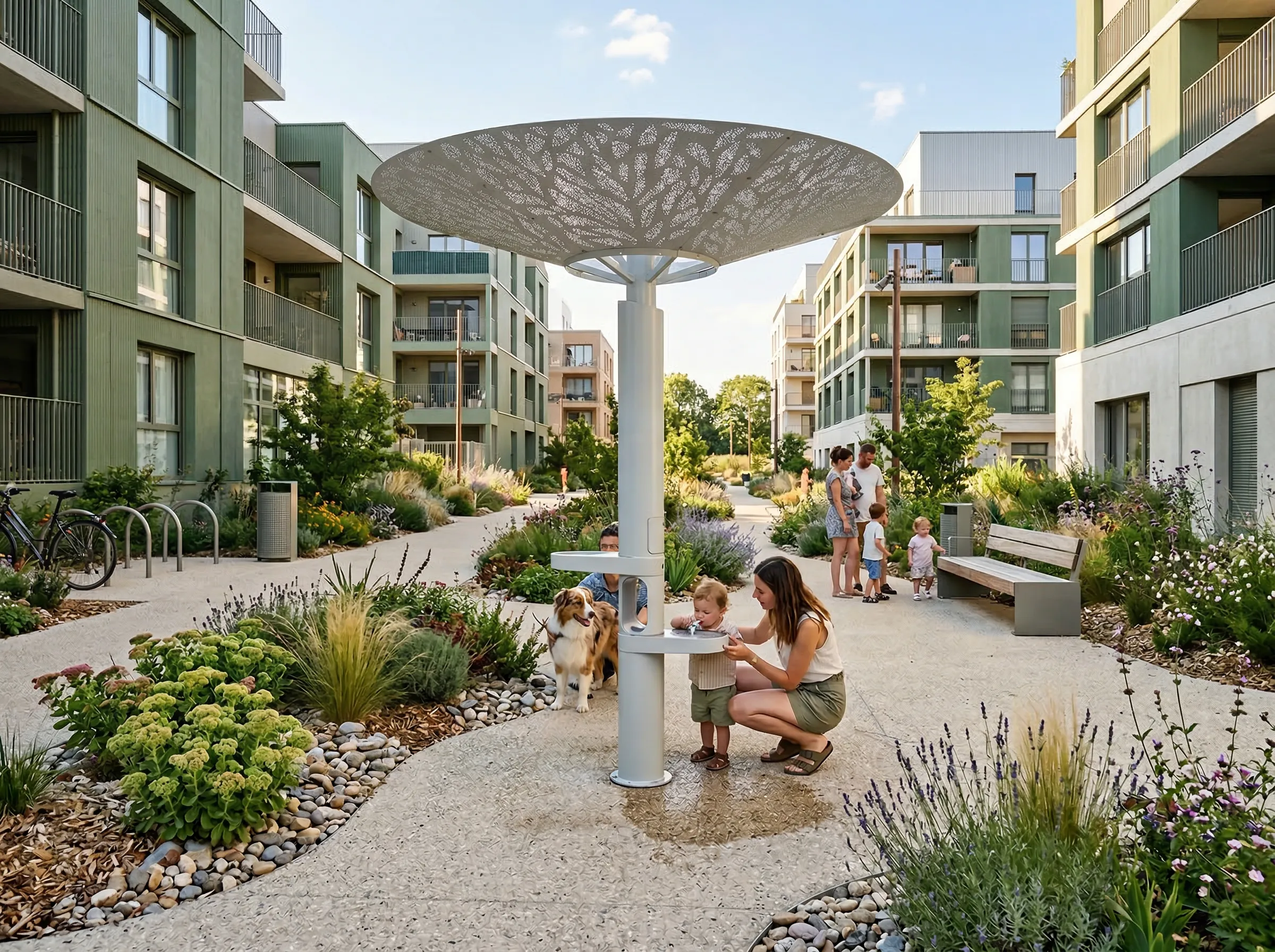
Our fountain Mât Tonnelle creates a true urban oasis of greenery, combining shade with high-quality landscaping.
In Valenton, this type of installation transforms a concrete plaza into a pleasant place to relax, even in the middle of summer.
3. Misting: a targeted and fun solution
Mist systems can quickly lower the perceived temperature, especially in high-traffic areas.
They are particularly well-suited for:
- at playgrounds
- in public places
- at summer events
Misting provides an immediate (quickly noticeable) and fun (appealing to children and families) experience.
4. Combine solutions to maximize impact
An effective revitalization of public spaces often hinges on a simple combination:
- drinking water (water fountain)
- shade (vegetation, structures)
- misting (active zones)
It is this comprehensive approach that makes it possible to create effective, sustainable solutions to combat heat waves in urban areas.
For more information, check out our comprehensive guide “How to Create an Effective Urban Cooling Island?”
Where should cooling stations be installed in the city?
Not all public spaces have the same needs. It is essential to identify priority areas such as highly exposed paved squares, heavily trafficked pedestrian zones, parks and gardens, sports facilities, schoolyards, and tourist areas.
A good location should be visible, accessible, and useful within urban routes.
For example, installing a fountain near a pedestrian walkway or a playground maximizes its use.
The benefits of a revitalized public space
Implement cooling solutions generates immediate and lasting benefits.
For users
- improved thermal comfort
- access to drinking water
- more pleasant places to live
For the community
- enhancement of public spaces
- adaptation to climate change
- increased appeal
For the environment
- reduction of heat islands
- better water management
- integration of sustainable solutions
Key Takeaways
The revitalization of public spaces rests on three essential pillars:
• water (fountains, misters)
• vegetation (natural shade)
• smart design (strategic placement)
It’s also important to note that the most effective solutions combine several of these elements. The goal is to create sustainable urban oases of coolness that are accessible to everyone.
How can you take action?
In the face of heat waves, local governments must act quickly but wisely.
There are several ways to achieve this: prioritizing the most vulnerable areas, implementing scalable solutions, anticipating usage patterns (traffic volume, seasonality), or integrating these measures into a comprehensive strategy.
The choice of equipment is also key: durability, accessibility, autonomy, and sustainability must be central to the project.
Are you interested in installing a
drinking fountain in your community?
Conclusion
Cooling public spaces is no longer an option but a necessity for adapting cities to new climate realities.
By combining water fountains, green cooling stations, and misting systems, municipalities can transform their spaces into true comfort zones.
Practical solutions are already available today, such as the Mât Source fountain or green roofs, which provide an effective response to heat waves in cities.
The challenge is no longer just about occasional upgrades, but about building cities that are more resilient, sustainable, and livable.